


1st May 2018
Online Word of Mouth
Online Word of Mouth


Electronic word of mouth plays a huge role in shaping attitudes towards your organisation – and ultimately the buying decisions of potential customers. When your current, former, or potential customers talk about your organisation online (positive or negative) this is all part of electronic word of mouth. This could take place on your website, your social media channels, or external channels such as TripAdvisor or Yelp. Traditional word of mouth is really important too, but usually only travels as far as immediate family and friends, whereas word of mouth online can influence complete strangers.
Electronic word of mouth allows your visitors to play an active role in generating marketing material. Because it’s created by your audiences themselves it comes across as more authentic and credible than brand-controlled marketing. It allows potential visitors to see both the positive and negative views people are sharing about your organisation.
Checking out what your audience has to say about you online also offers you the opportunity to create a bountiful source of data about your audience – taking you beyond the quantitative metrics that Google and other social analytics can give you.
What drives people to post online?
Motivations behind why people post online are diverse but research shows that there are generally three main reasons why people take part:
- Social. The desire to send signals to others about their expertise, uniqueness, or social status – this will generally be people posting photos, checking in, or writing a status about visiting your organisation.
- Emotional. This is about sharing positive or negative feelings about the organisation.
- Functional. These are the questions that people used to phone up to ask – such as start times, opening times, and what facilities you have. By answering these questions online and starting a conversation you can present how friendly and welcoming an organisation you are.
This typically comes in the form of a review or a post, they have either had a really good time or an awful time and they want to share it.
But what if we get negative feedback?
Don’t be afraid of negative comments. Research shows that if your reviews and comments are overwhelmingly positive people are actually less likely to believe their authenticity. Also. by offering negative feedback your audience members might actually be giving constructive ideas. If you’re an arts organisation who is dedicated to serving your audiences – you’ve got to be ready to hear the good, the bad, and the ugly, in order to have a genuine conversation and make improvements.
How do I start?
Having active social media accounts is a good first step. That way people know that if they ask a question they are likely to get a reply. It also means that when they post something they can tag you in it.
Facilitating conversation on your website as well as social is important too. Although a lot of people use social media not everyone does. If you don’t have a comments section built into your site, consider quoting online reviews within the content of your site. Alternatively, a service like Disqus will allow you to add a comments section to your website.
Once you’ve identified channels to gather electronic word of mouth you can add invitations to comment on your website, social channels, and physical venue.
You can also start to gather information about the opinions and experiences of your audiences online, and not just on your own social channels. Check out TripAdvisor, Instagram, Facebook, and Twitter for mention of your organisation or venue. If you work in a larger organisation, you might even consider setting up a google email alert to notify you any time your organisation is mentioned online.
Electronic word of mouth works best when it is a conversation between the customer and the organisation. Remember to ask questions and to always thank or reply to anyone who leaves a comment or review about your organisation anywhere on the web. Plus, when people see replies from you on other people’s posts, it shows that you’re an organisation who is open and listening – and gives them social permission to ask questions too. If you’re struggling to get the ball rolling ask others in the office or your friends and family to post a few questions on your social platforms (but steer clear of flooding your sites with fake reviews!).
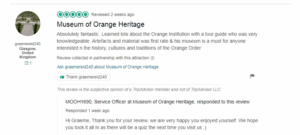
When you start to investigate your electronic word of mouth you might find that there are already conversations about your organisation happening online. Putting electronic word of mouth into your marketing plan should give you the confidence to expand on this, and make sure you’re making the most of a valuable customer-led resource.
Also worth a look



Newsletter
Fresh ideas for building your audience straight to your inbox
Our emails are full of content relevant to you that you can jump into when you have five minutes spare. We’ll send one or two emails a month and you can unsubscribe any time.
By clicking Sign Up you're confirming that you agree with our Terms and Conditions.

Contact us
We’re called thrive for a reason. Let us know how we can best support you – drop us a line any time.

Search our website
Search for free reports, toolkits, audience development tips and more