


16th June 2026
Still Afloat: A Community’s Living Heritage
Still Afloat: A Community’s Living Heritage
Context
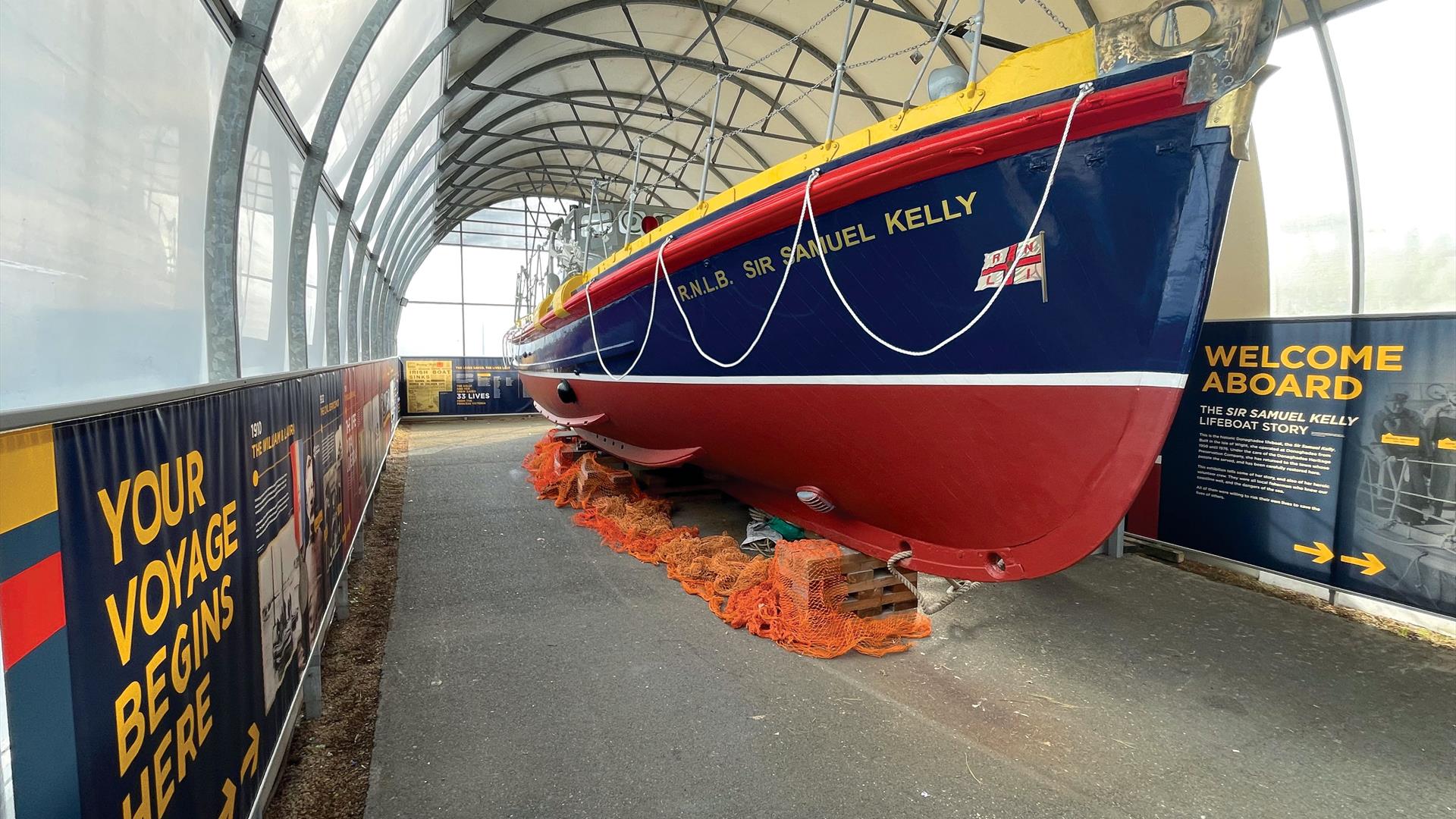
Donaghadee Heritage Preservation Company is a volunteer-run charity dedicated to protecting and sharing the maritime history of Donaghadee and the wider Ards Peninsula. On 31 January 1953, the Princess Victoria sank in the Irish Sea in one of the worst recorded storms in British history. One hundred and thirty-three people died. Among the vessels that answered the distress call was the Sir Samuel Kelly, a small RNLI lifeboat out of Donaghadee. Seventy years later, that lifeboat sits on Donaghadee harbour, restored, open to visitors and cared for by volunteers dedicated to making sure the story is not lost.
When Donaghadee Heritage commissioned thrive to evaluate their National Lottery Heritage Fund-supported project, they wanted to understand what that dedication had actually achieved. What we found went far beyond what the organisation itself had been able to see.
What thrive was asked to do
Donaghadee Heritage has never had a permanent paid member of staff. For most of its history, the organisation has run entirely on volunteer effort. When the lifeboat retired in 1980, they drove down to the Folk and Transport Museum with a borrowed low-loader and brought it home. What followed was two decades of wrangling, fundraising and persistence; securing a shelter, stripping back years of paint and waiting for the saturated timber to dry before restoration could begin.
In 2024, with Heritage Fund support, they expanded the site, appointed Outreach Officers to bring the story into schools and community spaces and began building the evidence base for a permanent heritage centre. They came to thrive for independent evaluation.
What we did
This is the challenge thrive sees time and again: small, community-led organisations doing far more than they can demonstrate. The evidence exists but is never gathered. This is not because it isn’t there but because no one has had the time or the tools to surface it.
Our evaluation combined desk research with in-depth stakeholder interviews and analysis of visitor survey data and website analytics. Working across many organisations gives thrive a comparative perspective that a single organisation can never have. That is, the ability to say not just what has been achieved but how that compares with similar organisations and why it matters to funders and decision-makers.
What changed
What the evaluation revealed was an organisation with a compelling, evidenced story it had never quite been able to articulate and a strong foundation to make the case for what comes next. Visitor satisfaction was consistently high, stronger than we typically see at comparable community heritage sites. Visitors rated their experience at the top end of the scale and almost all said they’d recommend it to others. None of this was visible to the organisation before the evaluation. They were delivering an exceptional experience without any way of knowing it or saying so.
‘The project has helped to clarify what is possible for the group, and what decisions need to be made to allow progression towards long-term goals.’
thrive brings the outside perspective that lets organisations see themselves clearly and make the case for their future with confidence.
What the data didn’t show (but mattered)
Our evaluation also created space for stories that data alone cannot capture. In primary schools, Outreach Officers brought the Princess Victoria disaster alive for children who discovered that history didn’t happen somewhere else. It happened here, to people from this town. In care homes, visits gave older people the chance to share memories of 1953, recorded and added to the archive.
‘Always somebody in the audience who remembered when the Princess Victoria got lost. Those stories fed into the archive for the ship.’
One account stood out. A woman discovered her mother had been booked on the Princess Victoria the day it sank and had only cancelled because she was ill. Every woman on that voyage perished. Her story is now preserved because evaluation created the structure for it to be heard.
‘In 20 years, there will be no one who has that personal connection – and no one who will do the work that this group have done to keep the story alive.’
That observation is not a prediction of failure. It is an argument for urgency and exactly the kind of insight that independent evaluation surfaces.
What this means for you
Donaghadee Heritage is not unusual. Small heritage organisations across Northern Ireland are doing remarkable work with limited resources, often too close to the work to demonstrate their value to funders and partners. The evidence exists and it needs someone with the expertise to find it, frame it and make it count.
thrive specialises in helping organisations understand and articulate their own impact, a genuine process of discovery that gives them the language, the evidence and the confidence to advocate for their own future.
If you’d like to find out what thrive could do for your organisation, book a free advice session with us here
Also worth a look


Newsletter
Fresh ideas for building your audience straight to your inbox
Our emails are full of content relevant to you that you can jump into when you have five minutes spare. We’ll send one or two emails a month and you can unsubscribe any time.
By clicking Sign Up you're confirming that you agree with our Terms and Conditions.

Contact us
We’re called thrive for a reason. Let us know how we can best support you – drop us a line any time.
Search our website
Search for free reports, toolkits, audience development tips and more