


26th October 2026
Who cares where audiences come from? | IMPACT Research Deep Dive
Who cares where audiences come from? | IMPACT Research Deep Dive

We’ve given you the overview of the main findings from our latest IMPACT report earlier this year (if you missed it, you can check it out here). But there’s so much in it we wanted space to talk about the other things we thought were interesting. So, over the next few months, we’ll be diving into some specific topics, starting this month with motivations.
Who cares where audiences come from?
You should. And not just because you need to report ‘bednight’ figures! The data on
where our audiences are coming from might seem simple, but it can deliver much
more than reporting to tourism-related funders. Where our audience comes from
matters for a whole host of practical operational and financial reasons. Audience
development is about building relationships and knowing where your audiences are
coming from provides a vital context for that. It gives you a window into practical
considerations like how far they have travelled but also speaks to the depth of the
relationship and the value they place on your work.
Marketing monies
If you’re happy with the potluck approach to marketing and have all the audience
numbers you want, then you can look away now. However, if you don’t, then think
about this: If we don’t know where our audiences are coming from, then how do we
know where to target our marketing? What are we basing our marketing decisions on
and how are we measuring the conversion rates or our marketing spend Return On
Investment?
If we know our audience is predominantly hyper-local and we are not attracting many
out-of-town-ers – and we want to – then that is very useful information to feed into
deciding which geographic areas those social media ads are targeted at.
Improving audience experiences
The more we know about our audiences the better we can anticipate their needs. For
example, if we know that 40%* of our audiences are coming from more than half an
hour’s drive away and that their average age is 65 years old, and we know that the
number one complaint for that age group is driving in the dark… then we might
reschedule performance times to better suit the audience need and – hopefully –
make our audiences happier and bigger.
*Note we’re using the 40% figure here as that is the average across all organisations in the IMPACT data for 2025-26, but every organisation and every event will have different data.
Q. Approximately how long did your journey take?
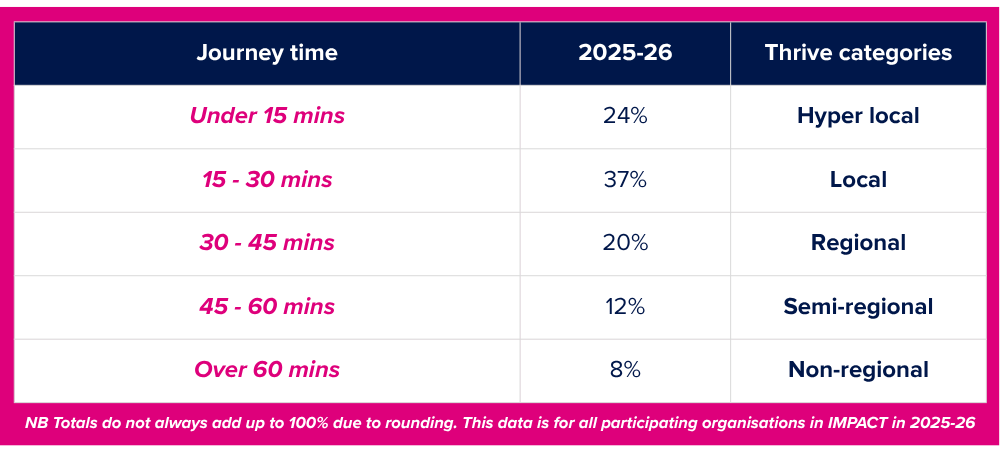
We can use this journey time data to plan for other aspects of the audience
experience too – like what is the likelihood that the audience will want refreshments if
they have travelled over an hour before the event rather than waiting for the interval.
Or the ability of your facilities to cope with the practical needs of audiences from
further afield – have you lined up who is replacing the loo rolls?
Financial implications
We can use this IMPACT data to test assumptions too: Are audiences going to
venues closer to home because of the rising cost of fuel and travel? By cutting the
journey time data by those who report that they are or aren’t affected by the Cost of
Living Crisis, we can see that the evidence suggests that is not the case.
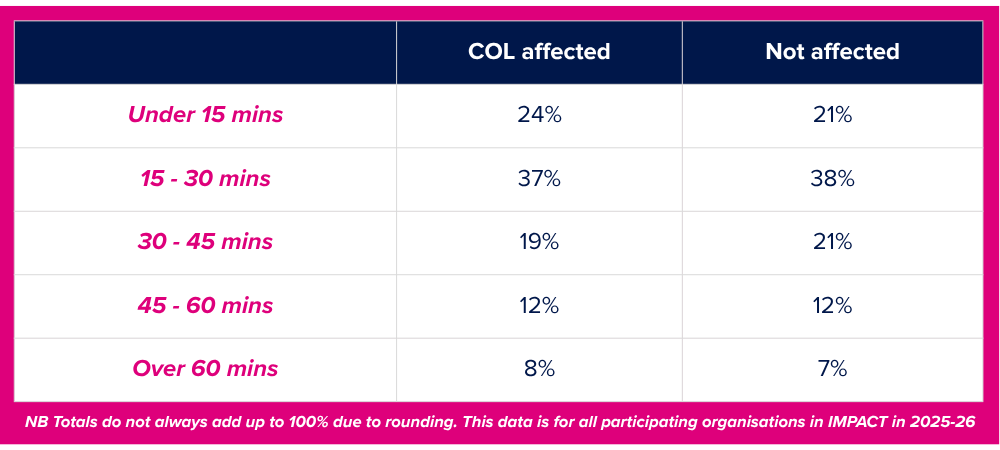
Slightly more people that are affected by the cost of living crisis report attending
more hyper-locally (24% compared to 21%) but there’s not a lot of difference. This
suggests that people are not changing their choice of venue (or event) based on the
cost of getting there.
Geographical data matters to all stakeholders
If what you do is bringing visitors to the area, then any data telling us about where
your audiences are from and what they do is excellent evidence to present to
funders and stakeholders. For example, if X% of our audiences are coming from
over an hour away and spending on average £Y per person on local hospitality and
we know the number of tickets or attendees that event/festival/year, then we can
easily work out a ballpark figure for how much cash that show/venue/festival is
injecting into the local area.
This ‘multiplier effect’ enables us to work out the Return On Investment figure that is
so useful for showing everyone – boards, businesses, funders and donors – just how
valuable the arts sector is. (Of course, it’s not just about the money. That multiplier
effect can be used to estimate how much wellbeing we’re sharing too.)
So, do you know where your audiences are coming from?
If you don’t, then get in touch and we’ll get you signed up to IMPACT.
Also worth a look



Newsletter
Fresh ideas for building your audience straight to your inbox
Our emails are full of content relevant to you that you can jump into when you have five minutes spare. We’ll send one or two emails a month and you can unsubscribe any time.
By clicking Sign Up you're confirming that you agree with our Terms and Conditions.

Contact us
We’re called thrive for a reason. Let us know how we can best support you – drop us a line any time.

Search our website
Search for free reports, toolkits, audience development tips and more